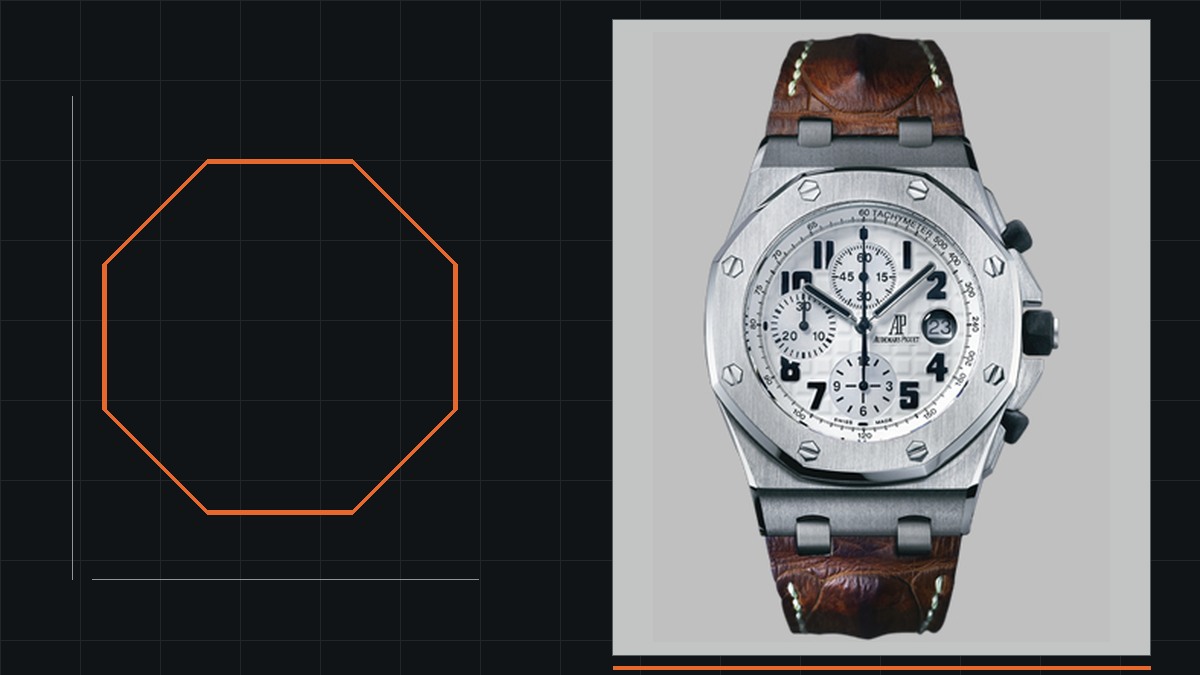
The octagonal bezel should look machined, not rounded
The bezel is the first engineering surface the eye reads. Each side should be even, the corners should remain sharp, and all eight screw positions should sit consistently. Over-polishing softens the octagon and can make the watch look older or cheaper than intended.
Brushing has a direction
AP-style finishing relies on satin-brushed planes separated by narrow polished bevels. On a replica, inspect whether brushing lines run straight and change direction exactly where the geometry changes. Circular or random brushing on a flat Royal Oak surface is an immediate quality clue.
The bracelet continues the case architecture
Integrated bracelets are difficult because link geometry must continue the width and bevel of the case while still articulating comfortably. Check the first link from the front, side and while hanging freely. Gaps that disappear when the watch is laid flat can become obvious on the wrist.
Clasp quality affects the entire wearing experience
Inspect engraving, hinge play, button action and how the clasp sits when closed. Sharp internal edges and loose folding parts are practical quality problems even when they are not visible in photographs.
Material claims are separate from finishing quality
A watch can be well finished without using the same metal as a genuine reference, and a claimed high-grade material can still be poorly finished. Stainless-steel grade, titanium, ceramic or precious-metal claims need evidence beyond color. Evaluate material identity and machining as separate questions.
QC with changing light angles
- Use side light to reveal brushing direction.
- Inspect bezel corners for over-polishing.
- Compare all eight screw recesses.
- Check first-link gaps with the bracelet hanging.
- Inspect clasp play and internal edges.
- Look for consistent transitions between polished bevels and brushed planes.
Bezel screw alignment is often misunderstood
The visible screw heads are part of a through-bolt construction on genuine Royal Oaks, and their appearance should be consistent. The important QC point is not forcing every slot into an artificial identical orientation; it is even recess depth, clean machining and a coherent relationship with the bezel.
Polished bevels should remain narrow
Over-polishing is one of the fastest ways to lose Royal Oak character. The polished chamfers are accents between larger brushed surfaces. If they become too wide, the watch looks soft and rounded. Examine corners where several bevels meet; that is where careless finishing becomes easiest to see.
Bracelet noise can reveal tolerance issues
A bracelet may look correct but rattle excessively because pin and link tolerances are loose. A short handling video can show how the links articulate and whether the clasp has play. This is a practical quality issue that static product photography cannot communicate.
Edges should be crisp without being uncomfortable
AP-inspired geometry naturally produces sharp-looking edges, but a wearable bracelet should not feel unfinished. Ask about sharp internal bracelet edges and clasp corners. Good finishing preserves visual crispness while removing burrs and uncomfortable machining marks.
Caseback orientation matters on display-back models
Engraving, screws and sapphire openings should sit consistently relative to the case. A back that is visibly rotated or unevenly seated can indicate thread or gasket issues. This is not only cosmetic; poor seating can affect dust and moisture resistance.
Re-finishing has limits
Minor scratches can often be brushed or polished, but every refinishing pass removes material. On an octagonal case, aggressive polishing can permanently soften edges and widen bevels. Buyers considering a used replica should value original geometry over a mirror-like surface that has already been heavily reworked.
Link-side finishing deserves macro inspection
The visible tops of bracelet links may be carefully finished while sidewalls remain rough. Ask for photographs with the bracelet flexed so link sides are exposed. This reveals machining marks, plating edges and pin fit that are hidden when the bracelet lies flat.
Workshop test: trace one finishing line from bezel to clasp
Pick one visual line—such as the polished bevel along the case—and follow how it continues into the bracelet. Better construction creates continuity; weaker builds interrupt the line with mismatched widths or abrupt finish changes. This simple tracing exercise often reveals more than comparing isolated close-ups because Royal Oak design depends on connected geometry.
Wear changes finishing over time
Brushed steel develops shiny contact points while polished edges accumulate fine scratches. Buyers of used replicas should distinguish normal wear from poor original finishing. Consistent wear along high-contact zones is expected; random deep scratches around screw recesses or crooked re-brushing can indicate previous repairs or careless refinishing.
Source notes
Technical specifications in this file are cross-checked against manufacturer material where available.