Keep the archive, remove the old price argument
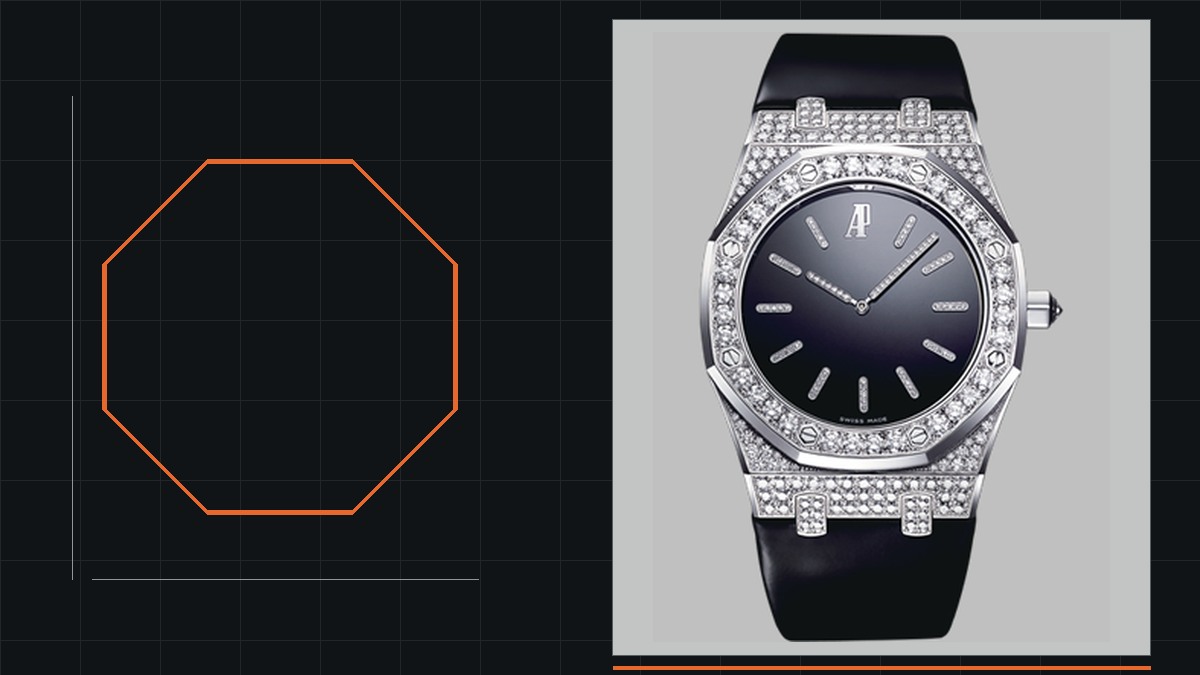
The original article centered on an expensive gem-set AP reference and compared its price with other luxury watches. Those market figures are no longer useful. What remains useful is the watchmaking problem: when a Royal Oak combines angular case architecture with diamonds, every line of stone setting must reinforce rather than obscure the geometry.
Gem setting should look deliberate, not sprayed on
A replica with stones around the bezel or case should be judged for uniform size, spacing, seat depth and alignment. Random gaps, uneven prong height and stones that sit at different angles are obvious under macro photography. If the seller claims natural diamonds or a particular metal, documentation is required; photographs alone cannot prove those materials.
Polished and brushed surfaces still need separation
Stone setting does not eliminate the Royal Oak finishing language. Check exposed case and bracelet surfaces for straight brushing, clean bevels and consistent edges. On a white-metal-style watch, poor polishing can make the case look soft and over-rounded.
Dial and strap configuration should match the exact reference
Archived special editions are often reproduced with mixed parts. Compare dial markers, hand color, strap material and clasp finish with the exact reference a seller names. A generic “Tuxedo” label is not enough to establish the configuration.
QC under strong, even light
- Use diffuse light to inspect stone rows and prong height.
- Check octagonal bezel symmetry before looking at sparkle.
- Inspect polished bevels for waviness or over-rounding.
- Confirm dial, strap and clasp configuration match the claimed reference.
- Treat metal and gemstone claims as claims requiring evidence, not visual assumptions.
Stone quality and setting quality are different questions
Even without testing gemstone identity, setting work can be judged. Equal table height, consistent spacing, straight rows and clean metal around each seat indicate better execution. A seller may emphasize carat terminology while avoiding close-up images of the actual setting quality.
White-metal styling exposes finishing marks
Polished white surfaces show hairlines and waviness differently from brushed steel. Examine transitions around the bezel and lugs under diffuse light. A mirror finish should not erase the underlying Royal Oak geometry.
Resale-style price language ages quickly
The original page spent much of its value proposition comparing six-figure prices. That information dates rapidly and does not improve replica QC. The revised page focuses instead on stable characteristics: configuration, finishing, stone alignment and material evidence.
Stone rows should respect the octagon
On a Royal Oak, gem setting has to follow the eight-sided bezel rather than visually turning it into a circle. Inspect corner transitions. Stones that become crowded or irregular at the corners can blur the geometry and are difficult to hide in high-resolution images.
Aftermarket-style aesthetics should be disclosed
Some replica designs reproduce an official gem-set reference; others are fantasy combinations inspired by AP. Both can be visually appealing, but they serve different expectations. The listing should distinguish a reference-specific copy from an aftermarket-style interpretation instead of implying every configuration existed in the AP catalogue.
Clasp and strap materials need the same scrutiny as the case
On a dressier or gem-set configuration, the clasp is often seen and handled more than the caseback. Check stone setting if present, engraving, hinge tension and whether the metal tone matches the case. A high-polish case paired with a rough clasp is a common inconsistency.
Decision note: reference-specific versus fantasy configuration
Gem-set AP-style watches occupy a grey area between reference copies and custom-inspired designs. Decide which category you want. If accuracy to a historical reference matters, every stone layout, dial and strap choice should be checked. If the goal is simply a Royal Oak-inspired jeweled watch, finishing quality can be judged on its own without pretending the configuration is factory-correct.
Source notes
Technical specifications in this file are cross-checked against manufacturer material where available.